Dubai's Mega Projects Shaping Urban Growth
Intro
Dubai has, over the past few decades, emerged as a shining beacon of urban development, captivating global audiences with its audacious architectural endeavors. The city is constantly pushing the envelope, transforming its skyline with jaw-dropping structures and sprawling commercial complexes. This surge in urban development is not just about aesthetics; it encapsulates intricate economic strategies and a vision for sustainable living. The mega projects in Dubai stand as testaments to the city’s relentless ambition and position in the global market.
Embracing innovation and engineering excellence, these projects have established a reputation that attracts investors, expatriates, and tourists alike. However, beyond the skyscrapers and luxury resorts lies a less-discussed narrative. Each mega project, while dazzling in its scope, also presents a unique set of challenges and opportunities. Careful consideration of environmental impacts, real estate trends, and the fundamental shifts in market dynamics all play crucial roles in this ongoing story.
In this exploration of Dubai’s urban transformation, we will dissect significant mega projects that characterize the city’s expansion, look at how they reshape the property market, and delve into buying and selling guidelines for those interested in tapping into this vibrant landscape.
By understanding the forces at play, one can better appreciate the profound changes occurring in Dubai’s urban fabric, positioning themselves advantageously in a continuously evolving marketplace.
Overview of Mega Projects in Dubai
Mega projects in Dubai exemplify the city's relentless pursuit of architectural grandeur and urban advancement. These monumental endeavors are not merely physical structures; they embody the ambition, ingenuity, and variation of human vision in crafting sustainable environments. As we traverse this landscape of innovative architecture, it becomes clear that the ramifications of such projects echo throughout social, economic, and environmental spheres.
Historical Context
To truly grasp the significance of Dubai's mega projects, one must first recognize the historical backdrop against which they have emerged. From humble beginnings as a small fishing village, Dubai's evolution has been akin to the steady rise of a phoenix. The discovery of oil in the 1960s sparked a transformation that propelled the emirate into the global spotlight. This newfound wealth catalyzed a visionary approach to urban development, aimed at reshaping not only the skyline but also the very identity of the city. Projects such as the Burj Al Arab, which opened in 1999, served as pivotal markers of this transformation, setting the tone for future architectural ambitions.
Historically, these projects reflect a strategic vision to diversify the economy beyond oil, focusing instead on tourism, trade, and real estate. This shift has created a unique narrative of growth and innovation characterized by rapid planning and execution. The stories behind these projects are often painted with bold strokes, representing not just engineering feats but also global ambitions to create iconic landmarks that resonate with both residents and visitors alike.
Importance of Mega Projects
The impact of mega projects in Dubai transcends the confines of the structures themselves. They act as catalysts for economic vibrancy, drawing investments from international stakeholders, and fostering an ecosystem ripe for both established players and new entrants. With every skyscraper that touches the clouds and every expansive mall bustling with activity, the local economy receives a powerful boost—one that promotes employment across numerous sectors, from construction to retail.
Moreover, these projects have a profound influence on tourism. Landmarks such as the Dubai Mall not only attract millions of visitors each year but also serve as a backdrop for cultural exchange and community interaction. The emphasis on creating unique experiences within these spaces enhances Dubai's position on the world tourism stage.
Furthermore, mega projects underscore a commitment to sustainability and environmental stewardship. Initiatives such as the Sustainable City strive to harmonize urban development with ecological preservation, showcasing a shift towards responsible growth in a region often criticized for its resource consumption.
"Dubai's ambition is to turn the desert into a thriving urban nexus, where innovation meets sustainability."
Key Mega Projects
Mega projects are not merely structures; they are indicators of ambition, vision, and economic strategy. In the case of Dubai, these projects symbolize the metamorphosis of a desert landscape into a thriving cosmopolitan hub. They draw millions of visitors and investors, making them the backbone of the city's economic strength. Each mega project serves a specific purpose, from tourism to residential spaces, and thus presents a unique vantage point on how Dubai operates.
Burj Khalifa
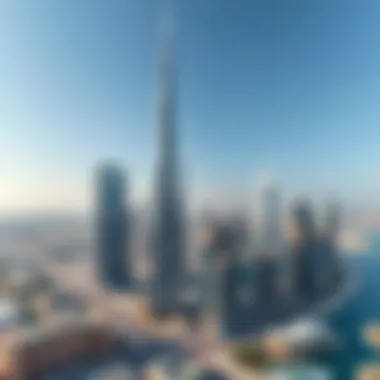
In a city defined by its skyline, the Burj Khalifa stands as the crowning glory. Towering at over 828 meters, it is more than just the tallest building in the world; it represents human ingenuity and aspiration. The Burj Khalifa is significant not only because of its height but also due to the intricacies involved in its construction. The building employs a ‘buttressed core’ structural system, which helps withstand high winds — an architectural marvel indeed.
Moreover, this skyscraper has become a symbol of Dubai itself, attracting tourists and business travelers alike. The observation deck on the 148th floor provides stunning views of the city, acting as a magnet for visitors. The Burj Khalifa does not just add to the skyline but also contributes significantly to the economy by enhancing tourism and creating thousands of jobs in the hospitality and services sector.
Dubai Mall
Adjacent to the Burj Khalifa is the Dubai Mall, one of the largest shopping venues in the world. This mega project goes beyond mere retail; it provides an entire experience. Visitors can see an aquarium, an ice rink, and even a virtual reality park within its walls. It transforms a shopping trip into a multifaceted adventure.
From an economic perspective, the Dubai Mall is a gold mine. It attracts nearly 80 million visitors per year, which culminates in an impressive footfall that supports various businesses. Restaurants, stores, and entertainment facilities benefit from this high traffic. The mall serves as a catalyst for further developments within its vicinity, including residential and commercial properties, thus enhancing the overall urban landscape.
Palm Jumeirah

Perhaps no project the size of Palm Jumeirah has captured the imagination quite like this man-made island. Shaped like a palm tree, it’s an extraordinary feat of engineering that has made waves — quite literally — in the world of real estate. Rising from the sea like a fortress of opulence, this project is home to luxurious villas, upscale hotels, and pristine beaches.
The strategic intent behind Palm Jumeirah can be seen in its economic ramifications. It attracted high-net-worth individuals and international investors and created a niche luxury market. The real estate prices on the Palm speak volumes of its desirability, with properties often sold at a premium, thus boosting the overall property values in Dubai.
Dubai Frame
The Dubai Frame offers a different perspective on the city, both literally and figuratively. This architectural piece serves as a bridge between the city's past and future. Shaped like a giant picture frame, it provides panoramic views of old and new Dubai. It is a cultural and historical icon, showcasing the city’s rapid development.
Economically, the Dubai Frame draws thousands of tourists, channeling them to the surrounding areas and promoting local businesses. It is not only a feast for the eyes but also a testament to how landmark structures can impact local economies positively.
Expo Dubai Site
Though delayed, the Expo 2020 Dubai site promises to be a game-changer in how events are hosted. Designed to facilitate innovation and sustainability, it houses pavilions from various countries, each showcasing their cultures and technologies. This project has set the stage for future events in Dubai, projecting it as a global center for trade and culture.
The economic implications are vast, as it is expected to attract millions of visitors, which will inevitably inject money into the local economy. More importantly, it positions Dubai as a leader in sustainable urban development, showing that massive projects can harmonize with global social and economic needs.
"Mega projects are not just about construction; they are about constructing the future."
Economic Impact of Mega Projects
The economic influence of mega projects in Dubai extends beyond mere construction; it represents a complex interplay of growth, investment, and opportunity. These vast undertakings have led to a paradigm shift in the regional economy, steering it towards diversification and sustainable development. Understanding the economic impact of these projects is crucial for various stakeholders, including investors, developers, and ordinary citizens, as it shapes the overarching narrative of Dubai’s urban transformation.
Employment Opportunities
One of the most significant outcomes of these mega projects is the creation of employment opportunities. Thousands of jobs are generated during the construction phase, which often involves numerous multinational contractors, local firms, and specialized labor. For instance, the construction of the Burj Khalifa alone employed over 12,000 workers at peak operations. However, the impact doesn’t stop there. Once these projects are completed, they lead to permanent job creation. For example, businesses that spring up around iconic structures like the Dubai Mall provide roles in retail, management, and hospitality, creating a ripple effect that enriches the community.
"Mega projects are not just brick and mortar; they are job-generating machines that fuel economic vitality."
The jobs created contribute significantly to reducing unemployment rates in the region, indirectly encouraging migration and population growth. This surge of workers and their families brings increased demand for housing, healthcare, and education, further stimulating the economy.
Investment Attraction
The allure of Dubai’s mega projects acts like a magnet for investment attraction, drawing in both local and international investors. The futuristic vision of the city, paired with cutting-edge projects such as the Dubai Frame, signals to the global market that Dubai is a hub of innovation and commerce. When investors see large-scale developments successfully completed, they often feel more confident to inject capital into other ventures.
Notably, the Dubai government has established various free zones that enhance the appeal to investors. These zones offer tax advantages, percentage ownership rights, and regulatory support which encourage foreign investment. The Expo 2020 site, now a part of a broader strategy for economical multi-use space, is also expected to be a powerful driver for future investments as it attracts international businesses eager to leverage the region’s growth potential. The economic climate around these mega projects fosters a profitable ecosystem ripe for investment, igniting greater financial collaborations.
Boosting Tourism
Tourism plays a pivotal role in the economy of Dubai, and mega projects significantly contribute to boosting tourism numbers. The arrival of attractions like the Palm Jumeirah and Dubai Mall not only pulls visitors but also enhances the overall visitor experience, influencing people to extend their stays.
Tourists are drawn to Dubai not just for sun-soaked beaches, but for the world’s tallest building, extravagant shopping facilities, and modern entertainment options. This influx of visitors translates into increased spending in various sectors including hospitality, retail, and transportation.
As a result, the tourism industry thrives, with statistics showing Dubai welcoming over 16 million visitors in a year, and more than half of them coming due to attractions linked to mega projects. The infrastructure improvements tied to these mega developments, such as enhancements in transport safety and accessibility, make it easier for tourists to explore the city.
Real Estate Developments Linked to Mega Projects
The real estate landscape in Dubai is inherently intertwined with its mega projects. Major developments shape not just the skyline but also the very fabric of urban living. These vast structural endeavors encourage a symbiotic relationship with real estate by creating a demand and setting benchmarks for luxury and functionality in residential and commercial spaces.


As Dubai positions itself as a global hub, it becomes clear that the growth of its real estate is not merely a byproduct of urbanization but a carefully orchestrated effort that aligns with the larger vision of the emirate’s developmental goals. The completion of each mega project not only attracts investments but also influences the types and price points of real estate developments that follow.
Real estate in Dubai, fueled by mega projects, acts as a catalyst for economic growth and social transformation.
Luxury Residential Properties
With iconic structures like the Burj Khalifa and the Palm Jumeirah at the helm, luxury residential properties have become highly coveted in Dubai. The allure of living in a space that offers not just a home but a statement is what draws discerning buyers. These luxury developments often feature state-of-the-art amenities and are located in prime areas with unmatched views.
Recent projects, such as the One Za'abeel and the Dubai Marina residential towers, illustrate how the market has evolved. Investors seeking high returns are particularly interested in these properties, which boast modern designs and sustainable living practices. The premium nature of these residences is further amplified by their proximity to leisure, dining, and retail spaces, making them desirable not only for homeowners but also for affluent tenants.
Families and individuals alike are attracted to these luxurious amenities, contributing further to the rapid growth of the luxury market in Dubai. However, potential buyers must navigate challenges such as ever-increasing price points and competition in the high-end segment.
Commercial Real Estate Growth
Commercial real estate is riding the coattails of mega projects in Dubai. The rise of bustling hubs around developments like the Dubai Mall and Dubai Science Park showcases the city’s ambition not merely to attract tourists but to create sustainable economic zones. High-rise office spaces and retail outlets are steadily emerging, tailored to meet the needs of businesses and match global standards.
The influx of multinational corporations seeking to establish a presence in the Middle East has cemented Dubai’s image as a business-friendly city. As a result, there has been an increase in demand for commercial spaces—especially those equipped with cutting-edge technology and facilities.
- Strategically located offices are becoming more attractive due to their accessibility.
- Retail units are being designed with unique architectural elements to draw foot traffic.
- Flexibility in layouts allows businesses to curate spaces that resonate with their brand identity.
The evolution in commercial real estate will likely continue, enhancing Dubai's role as a strategic business hub in the coming decades.
Impact on Property Values
The relationship between mega projects and property values in Dubai demonstrates the undeniable ripple effects of monumental construction. A new development can elevate the value of nearby properties, often increasing demand and consequently the price for real estate. Investors frequently keep a watchful eye on the stages of mega projects because significant advancements can lead to shifts in market dynamics.
Factors influencing property values include:
- Proximity to mega projects: As locations gain access to landmark sites and amenities, surrounding properties often appreciate in value.
- Enhanced infrastructure: Roads, transport facilities, and public amenities developed alongside mega projects contribute to higher property values.
- Market sentiments: The prestige associated with iconic projects can bolster a buyer's perception of value, making properties in these areas increasingly appealing.
Overall, mega projects in Dubai are not just effects of urban growth but pivotal drivers of real estate dynamics leading to a continually reshaped property landscape. Investors must gauge these developments closely to leverage potential shifts in real estate economics effectively.
Challenges in Mega Project Execution
The monumental scale of mega projects in Dubai, while inspiring, is not without its challenges. The execution of such ambitious endeavors poses a unique set of hurdles that developers and stakeholders must navigate to ensure the success and sustainability of these transformative projects. Understanding these challenges is crucial for investors, buyers, and developers, as it shapes not only the feasibility but also the longevity of the investments made in this vibrant urban landscape.
Financing Issues
Financing is the lifeblood of any mega project, especially in a city like Dubai, where the stakes are high and the ambitions are even higher. Securing funding often involves complex arrangements, including a mix of private investments, government funding, and international loans. The daunting scale of projects often leads to escalating costs that can spiral out of control. For instance, the Burj Khalifa, a landmark achievement, faced volatility in construction costs due to fluctuations in global materials markets.
To mitigate these risks, stakeholders often resort to innovative financing models. Public-Private Partnerships (PPPs) can help distribute the financial burden while tapping into the expertise of private-sector entities. Moreover, as the economic landscape evolves, financing strategies must adapt accordingly, leveraging new platforms, such as crowdfunding or blockchain technology, to attract diverse investments.
Sustainability Concerns
Dubai's mega projects undeniably push the envelope in architectural innovation, yet they also bring about pressing sustainability concerns. The environmental impact of such large-scale construction cannot be disregarded. Often, the very materials that make these buildings awe-inspiring can contribute to a substantial carbon footprint.
The challenge lies in pursuing a balance between development and sustainability. Incorporating Green Building Standards and engaging in eco-friendly practices can significantly mitigate negative outcomes. Utilizing renewable energy, green roofs, and sustainable materials not only enhances the project's image but also contributes to a healthier urban ecosystem. For example, the Mohammed bin Rashid Al Maktoum Solar Park is an exemplary initiative aimed at showcasing how mega projects can set a benchmark for sustainability in construction.


Regulatory Hurdles
Navigating regulation is akin to sailing through stormy waters. Dubai's urban planning regulations are designed to ensure safety, accessibility, and sustainability, but they can sometimes become a bottleneck for mega projects. Developers must contend with local laws and zoning requirements that can shift due to evolving priorities within governmental bodies.
Obtaining permits can be a laborious process, often resulting in project delays that can have massive implications on timelines and budgets. This requires foresight and robust project management skills, as stakeholders must be prepared to adapt to regulatory changes while still moving towards their overarching goals. Collaboration with local authorities early in the planning stages can alleviate much of this friction, ensuring that projects operate smoothly through the bureaucratic labyrinth.
In summary, addressing financing issues, sustainability concerns, and regulatory hurdles is imperative for the successful execution of mega projects in Dubai. Stakeholders who can navigate these challenges effectively will not only achieve their immediate goals but also enhance the long-term viability and reputation of their developments.
"The success of mega projects relies not solely on grand designs but also on the ability to address the multifaceted challenges that accompany them."
By understanding and confronting these obstacles, the vision for an expansive urban landscape can truly take flight.
Future Outlook for Mega Projects
The outlook for mega projects in Dubai is as bright as the city’s skyline. As urban landscapes morph under the weight of ambition, an array of factors suggests that Dubai's mega projects will continue to play pivotal roles in shaping not just the city, but the global economic tapestry. Understanding this future outlook is essential for investors, buyers, and stakeholders eager to navigate the evolving terrain of urban development.
"Dubai’s mega projects are not just buildings; they are symbols of future potential and ambition, echoing through economies worldwide."
Emerging Trends in Urban Development
As we gaze into the future, urban development trends are telling a story of resilience and reinvention. One notable trend is the push for mixed-use developments, which combine residential, commercial, and leisure spaces within a single area. This not only optimizes land use but fosters community interaction.
- Smart cities: Technology is at the core of urban planning, leading to the development of smart infrastructure that integrates AI, IoT, and data analytics. For instance, the upcoming Dubai Creek Tower is not just an architectural feat but also a smart building that will optimize energy consumption and enhance the quality of life for residents.
- Sustainable practices: The emphasis on sustainability will define future projects. Developers are increasingly exploring renewable energy sources, green building materials, and water conservation systems. Projects like The Sustainable City serve as benchmarks, showcasing how urban areas can thrive while being environmentally conscious.
Technological Innovations
In a city that thrives on innovation, technological advancements play an undeniable role in the planning and execution of mega projects. Cutting-edge technologies are making designs more efficient and functional.
- Robotics and Automation: The use of robotics in construction not only boosts efficiency but also enhances safety on-site. Projects in Dubai are beginning to leverage this technology to reduce construction times and improve precision.
- Advanced Building Materials: Innovations in materials science are yielding lighter, stronger materials that can withstand extreme weather conditions while being cost-effective. Future mega projects may incorporate 3D-printed materials, further accelerating timelines and reducing waste.
- Virtual Reality (VR) and Augmented Reality (AR): These technologies are changing the way developers and architects visualize projects. By utilizing VR and AR, stakeholders can experience immersive simulations before construction begins, allowing for better adjustment and refinements in design.
Role in Global Economic Landscape
Mega projects in Dubai hold more than just local significance; their impact reverberates across global markets. With increasing connectivity through initiatives like the Dubai World Central airport expansion, the city's position as a global hub is solidifying.
These projects not only attract tourism but also serve as beacons for international investments. The ripple effects are profound:
- Attract foreign direct investment (FDI), fostering a competitive environment.
- Generate job opportunities across various sectors, contributing to economic growth.
- Serve as models for emerging markets, showcasing how urban planning can propel a nation forward.
In closing, the future of mega projects in Dubai appears not only ambitious but also essential for those observing trends in urban landscapes. Understanding the depth of these developments provides insights into the broader economic implications, encouraging a proactive approach among potential investors and stakeholders.
The End: The Legacy of Mega Projects
The legacy of mega projects in Dubai extends beyond mere architectural wonders. These vast constructions play a pivotal role in defining modern urban living and reshaping economic paths. Investing in such grand endeavors not only underlines Dubai's ambition but also encapsulates its vision of becoming a global hub. The city’s landscape is a testament to what visionary thinking, commitment, and strategic planning can achieve.
Summarizing the Impact
The transformative impact of Dubai's mega projects can be observed through several lenses:
- Economic Growth: These projects have significantly contributed to the GDP of the UAE. With unparalleled investments flowing into the region, there’s been a ripple effect felt throughout various sectors.
- Tourism Enhancement: Visitors flock to see these architectural feats, translating into financial gains for the local economy. Landmarks like the Burj Khalifa and the Dubai Mall have become synonymous with the city itself, acting as crucial magnets for tourists.
- Innovative Design and Sustainability: The approaches employed in these projects often set trends. Concepts of sustainability are increasingly integrated, demonstrating a commitment to future generations.
- Community Development: Beyond just commercial spaces, projects like Palm Jumeirah have fostered whole communities, revitalizing areas and providing homes, leisure spaces, and shopping.
"The mega projects of Dubai not only showcase the architectural prowess of our times but also emphasize the city’s desire to push boundaries and inspire others."
The legacy left by these structures is monumental—not just in their design, but in the way they harness the spirit of innovation and resilience. The impact reverberates within the community, creating jobs, fostering partnerships, and igniting future possibilities. As stakeholders—be it investors, developers, or architects—reflect on these endeavors, it's clear that the legacy of Dubai's mega projects is intricately woven into the fabric of the city's identity.